At OSCE Conference, Human Rights Organisations Call for Stronger Religious Freedom Protections
Posted on: October 7, 2026
Country:
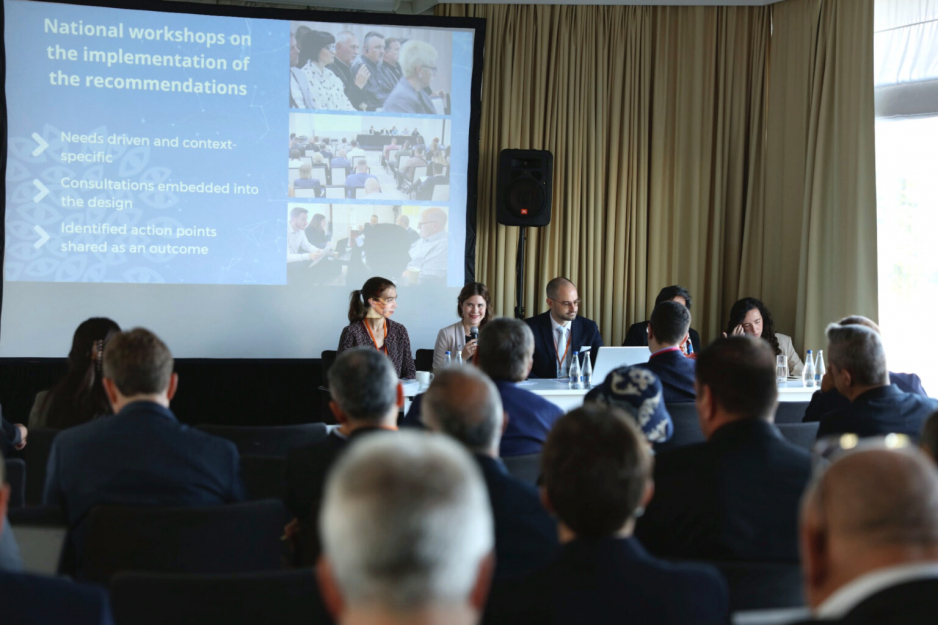
At a side event co-organised by OIDAC Europe during the Warsaw Human Dimension Conference on 7 October 2026, human rights organisations and ODIHR discussed anti-religious hate crime, the safety of Christian converts and restrictions on freedom of religion or belief.
Representatives of civil society and the OSCE Office for Democratic Institutions and Human Rights (ODIHR) met in Warsaw on 7 October 2026 to discuss how participating States can respond more effectively to anti-religious hate crime. The side event, “Hate Crime and Freedom of Religion or Belief in the OSCE Region: Responses to Anti-Religious Intolerance and Discrimination in a Multi-Faith Context,” followed an ODIHR workshop in Rome on anti-Christian hate crimes earlier this year and placed that discussion within a broader examination of threats affecting different religious communities.
Mikaela Christiansson, an adviser in ODIHR’s Tolerance and Non-Discrimination Department, presented its practical guides on antisemitic, anti-Muslim and anti-Christian hate crimes. She highlighted that an effective response must recognise how hostility and security needs differ between communities, while ensuring that protection is available to people of all religions and beliefs. ODIHR’s guidance gives authorities practical tools to improve reporting, work with affected communities and address threats to places of worship and religious individuals.
OIDAC Europe’s Executive Director, Anja Tang, presented findings from the organisation’s 2025 report: 2,211 anti-Christian hate crimes were identified across Europe in 2024, including 274 attacks against people, up from 232 in 2023. She explained that police and civil society records can complement one another. Comparing them helps identify incidents that might otherwise be overlooked and shows where national recording systems could be improved. Mrs. Tang also raised concerns about restrictions affecting Christians’ ability to express their faith in public, including cases involving silent prayer near abortion facilities, and urged Participating States to uphold their commitments to freedom of religion or belief.
Marcela Szymanski, Head of International Advocacy at Aid to the Church in Need (ACN) International, addressed the wider forces driving persecution and restrictions on religious freedom. She drew attention to threats associated with authoritarian governments, transnational criminal organisations and religious extremism. Her contribution stressed that these situations demand cooperation between public institutions and organisations that document the experiences of affected communities, particularly where intimidation and violence cross national borders.
Thibault van den Bossche, Advocacy Officer for Religious Freedom at the European Centre for Law and Justice (ECLJ), focused on asylum seekers who have changed their religion. He described how converts to Christianity can face intimidation or violence within asylum accommodation, especially when their conversion becomes known to other residents. He also highlighted the particular risks faced by women and argued that authorities must consider how religion, gender and migration status can combine to increase a person’s vulnerability. Protecting the right to change religion, he explained, must include ensuring that converts can live safely in the facilities where they have been placed.
Carmen Correas, Legal Officer at Alliance Defending Freedom (ADF), turned to the response of European institutions. She welcomed ODIHR’s approach of addressing intolerance against different religious communities while recognising the specific threats each faces. Correas called for the European Commission to appoint a coordinator dedicated to anti-Christian hatred and discrimination, alongside its existing coordinators addressing antisemitism and anti-Muslim hatred. Such a role, she argued, would help ensure that hostility towards Christians receives sustained institutional attention.
The event closed with a call for better hate crime data, practical protection for people at risk and closer cooperation between authorities, civil society and religious communities.
Watch the full side event on YouTube:
Image: MEDIA-SOCIETY.COM PRESS & CREATORS NETWORK. https://www.media-society.com/