Explore OIDAC research, selected publications from other organisations, the issues that shape our work, and a shared glossary.
OIDAC Reports
Anti-Christian Incidents October 2026
During October 2026, the Observatory on Intolerance and Discrimination against Christians in Europe (OIDAC Europe) recorded 33 violent incidents against Christian individuals, religious symbols and places of worship. The highest number was recorded in France (11), followed by…
Download the full reportPDF · 7.6 MBAnti-Christian Incidents September 2026
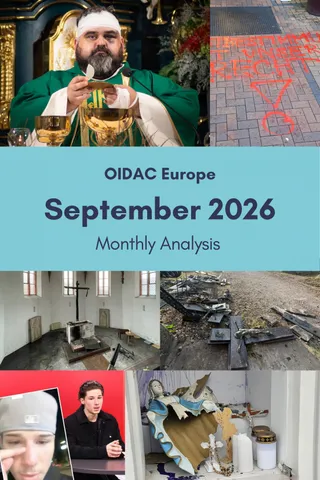
Although fewer anti-Christian hate crimes were recorded in September than in previous months, the 30 documented incidents were marked by particularly severe violence, including a homicide, several physical assaults and an alleged terrorist attack plot. A total of eight…
Download the full reportPDF · 19.1 MBAnti-Christian Incidents July 2026
OIDAC Europe recorded 40 anti-Christian hate crimes during July 2026, including vandalism, arson, desecration, violence, threats and thefts targeting religious objects.
DownloadPDF · 1.0 MBAnti-Christian Incidents June 2026
OIDAC Europe recorded 40 anti-Christian hate crimes during June 2026, including arson, vandalism, desecration, violence, threats and thefts targeting religious objects.
DownloadPDF · 846 KB



Key Issues

Restrictions on Religious Freedom
Religious freedom includes the right to live, practise and share one’s faith in public and private. Across Europe, restrictions on worship, religious symbols and peaceful Christian expression can undermine this freedom and lead to self-censorship.

Self-Censorship
Fear of social rejection, professional repercussions or legal consequences can lead Christians to hide their beliefs. This self-censorship limits religious expression and weakens open dialogue in universities, workplaces and public life.

The Situation of Christian Converts in Europe
Converts to Christianity in Europe can face family rejection, intimidation, threats and violence because of their change of faith.

Biased Media Reporting and Negative Stereotyping
Biased reporting and negative stereotypes can reinforce prejudice against Christians and cast their participation in public life as suspect. Accurate, informed coverage is essential to distinguish specific wrongdoing from the stigmatisation of believers as a group.
Further Resources
‘Self-Censored’ — Documentary
Nine Christian students from seven countries discuss the pressures that can lead them to withhold opinions or conceal their faith at university.
Watch (opens in a new tab)The Global Human Rights Landscape
A Short Guide to Understanding the International Organizations and the Opportunities for Engagement.
Buy publication (opens in a new tab)Censored
How European "Hate Speech" Laws Are Threatening Freedom of Speech.
Buy publication (opens in a new tab)


Terms and Definitions
Plain-language definitions for recurring terms used throughout OIDAC’s cases and publications.