Prayer Outside Abortion Clinic Protected by Law, Spanish Court Rules
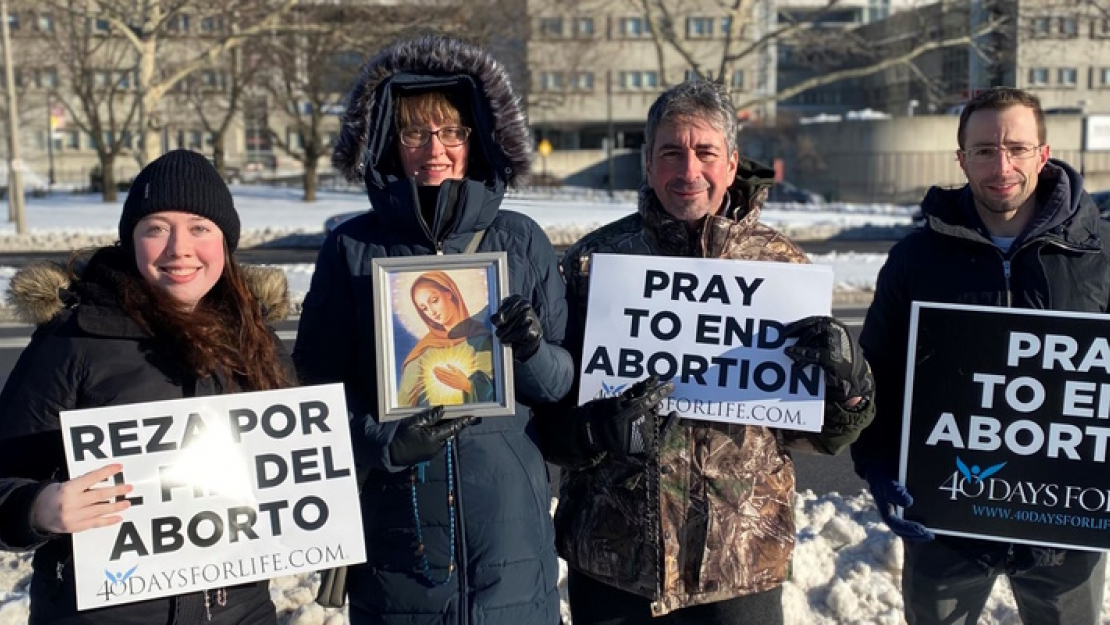
A criminal court in Vitoria, Basque Country, has acquitted 21 pro‑life volunteers accused of harassment for praying peacefully outside an abortion clinic, ruling that they had “done nothing more than exercise their free right of assembly” and behaved in an “exquisitely peaceful manner.” The court found no evidence of intimidating conduct under the penal code’s anti‑harassment provision.
The case concerned daily prayer vigils held between 28 September and 6 November 2022 outside the Askabide abortion clinic in Vitoria-Gasteiz as part of the “40 Days for Life” campaign. Prosecutors relied on a 2022 reform of the Spanish Penal Code criminalising behaviour intended to “hinder” women seeking abortions. They sought prison sentences of up to five months, or alternatively fines, community service, and restraining orders preventing the defendants from approaching within 100 metres of the clinic.
In December 2025, after three years of proceedings, the court rejected these arguments, finding that the defendants exercised their “freedom of assembly at a place with substantial symbolic value for their cause.” The demonstrators stood on the public pavement opposite the clinic, around 15 to 30 metres away, in small groups of no more than five people. They prayed quietly, displayed small posters with messages such as “you are not alone, we are here to help you,” and did not block access, shout, approach women, distribute leaflets, or use graphic imagery. The court emphasised that their prayers were “not loud enough to be heard inside the clinic.”
Crucially, the judge noted the absence of concrete harm. “No woman was called to testify that she had been prevented or discouraged from entering the clinic because of the group’s presence,” the ruling states. There was no evidence that appointments were cancelled or that clinic operations were disrupted. On that basis, the court concluded that the legal threshold for coercion or intimidation had not been met and acquitted all 21 defendants.
The human rights implications are significant. Across Europe, governments are introducing so-called “buffer zones” and criminal penalties around abortion facilities. While framed as protecting access to healthcare, such measures can directly restrict freedoms protected by the European Convention on Human Rights. Article 11 safeguards peaceful assembly, while Article 9 protects freedom of religion and conscience, including collective and public manifestation. Any restriction must be lawful, necessary, and proportionate.
The Spanish court’s ruling draws a clear line. Peaceful, non-obstructive prayer on public streets does not become unlawful merely because it occurs near an abortion clinic. Blanket prohibitions risk criminalising expression based solely on viewpoint or religious motivation, undermining the protections of Articles 9 and 11. If symbolic presence alone is treated as coercion, freedom of assembly becomes hollow wherever authorities designate a space as sensitive.
Furthermore, the ruling highlights that convicltions must be based on evidence rather than assumptions. The acquittal is a warning against expanding criminal law to suppress peaceful religious expression and a reminder that democratic societies must tolerate even deeply contested forms of assembly if human rights are to remain meaningful.
Court ruling: SJP 16/2025 - ECLI:ES:JP:2025:16
Sources: cne.news, omnes, democrata.es, cruxnow.com
Image: X