Call to Remove Religious Symbols Hits European Court
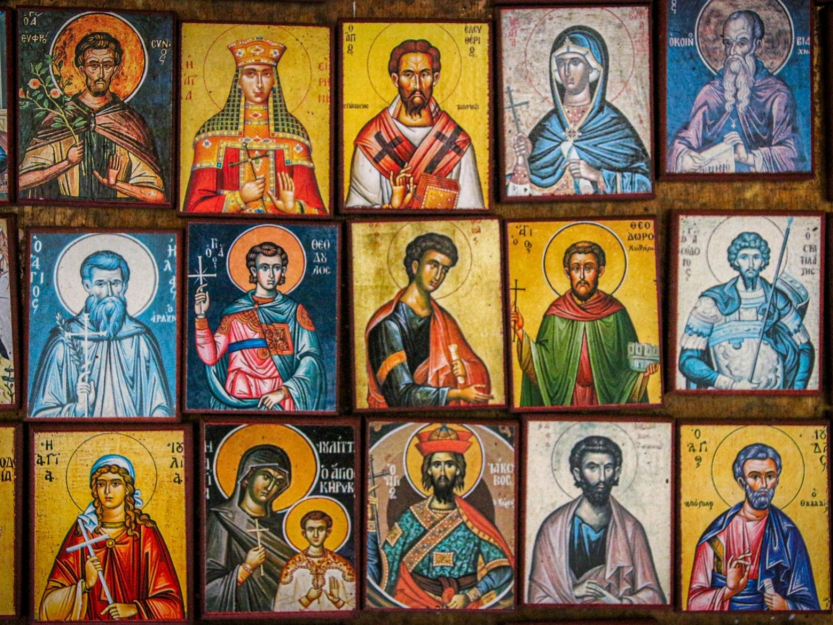
In July 2025, the European Court of Human Rights (ECtHR) communicated Union of Atheists v. Greece (Application No. 001-244533), a case seeking the removal of Christian icons from Greek courtrooms. The application reflects a broader attempt to eliminate longstanding religious symbols from public institutions across Europe, raising concerns about whether state neutrality is increasingly interpreted as requiring the erasure of religious heritage from public life.
The case originates from two applications lodged by individuals identifying as atheists who objected to the presence of Christian icons displayed in courtrooms during hearings relating to religious issues.
The applicants requested that the icons be removed, arguing that their presence was discriminatory, compromised the objectivity of the court, and violated their right to a fair trial. They further claimed that exposure to religious symbols in a courtroom infringed their freedom of thought, conscience, and religion.
Greek courts rejected these arguments and declined to order the removal of the icons. The applicants subsequently brought the matter before the ECtHR. In July 2025, the Court formally communicated the case to the Greek Government, indicating that it will examine the compatibility of the icon displays with the European Convention on Human Rights (ECHR).
In January 2026, in a third-party submission, ADF International argued that the display of religious symbols forming part of a country’s historical and cultural heritage “cannot, by itself, limit anyone’s freedom of belief or call the fairness of a court into question,” and cautioned that state neutrality must not be reinterpreted as hostility toward Christianity.
The Court has previously addressed religious symbols in public institutions in Lautsi v. Italy (2011). In that landmark judgment, the Grand Chamber held that the display of crucifixes in Italian state-school classrooms did not amount, in itself, to indoctrination or a violation of Article 9 of the European Convention of Human Rights.
Importantly, the Court emphasized the margin of appreciation afforded to Member States in matters concerning religion in public life, particularly where symbols form part of historical and cultural tradition. The Court drew a clear distinction between coercion and passive exposure to religious imagery.
Whether the Court will follow this reasoning will be instrumental not only for Greece, but for many countries across Europe where religious symbols remain part of public institutions. A judgment requiring their removal could open the door to further challenges against longstanding traditions in courtrooms, schools, and government buildings. Conversely, a reaffirmation of the Court’s existing jurisprudence would clarify that state neutrality does not necessitate the erasure of religious heritage from the public sphere.
Source to Case: ECtHR Union of Atheists v. Greece
Further Sources: ADF International, Informazione Cattolica
Image: Pixabay