Catholic Priest Faces Criminal Investigation Over Statements on Church Teaching on Sexuality
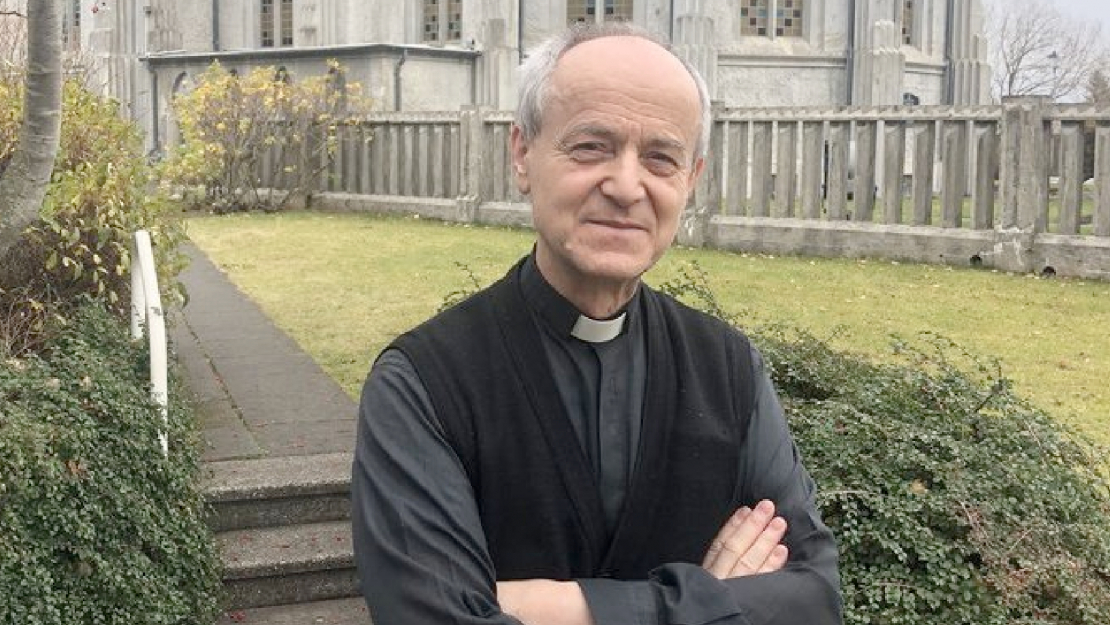
Monsignor Jakob Rolland is facing a potential criminal trial after explaining Catholic teaching on homosexuality in a radio interview and stating that the Church offers spiritual guidance to persons with same-sex attraction who seek it. Following the interview, LGBTIQ advocacy groups launched a campaign calling for legal action, leading to a police examination of the Catholic priest under Iceland’s 2023 ban on “conversion practices”.
According to reports, the controversy began when Msgr. Rolland appeared on Iceland’s public broadcaster RÚV and was asked whether homosexual persons could receive Communion. In response, he reiterated Catholic teaching that same-sex attraction in itself is not sinful, but that sexual acts outside the Church’s understanding of marriage require repentance and sacramental reconciliation before receiving the Eucharist. He also stated that some persons with same-sex attraction seek spiritual guidance within the Church, including those who wish to change aspects of their lives, and stressed that the Church does not engage in what are commonly termed “conversion therapies”, but offers pastoral accompaniment through prayer, sacramental life, and personal dialogue to those who seek it.
Following the interview, LGBTQ advocacy groups, led by Samtökin ’78, launched a campaign calling for legal action. The police in Reykjavík have confirmed that they are examining Rolland’s statements to determine whether a formal criminal investigation should proceed under Iceland’s 2023 penal code provision, Article 227b, which criminalises attempts to suppress or alter a person’s sexual orientation, gender identity, or expression through coercion, threats, or deceptive practices, with possible penalties of up to three years in prison.
The case has attracted significant public and political attention and has even led to discussion in Iceland’s parliament. The Ministry of Justice has questioned the appropriateness of raising accusations against an individual in a parliamentary setting, noting that such a step is unprecedented.
Msgr. Rolland has maintained that his remarks were a straightforward explanation of Catholic teaching and that the Church’s role is to accompany individuals who freely seek spiritual guidance, not to impose change through coercion. He further insisted that there is no legal basis for prosecution, since the law explicitly targets coercive practices, which he denies exist within the Church’s pastoral approach.
In two recent similar cases, a Catholic bishop in Spain and a Christian singer in Malta faced investigations under national laws related to so-called “conversion therapy” after expressing Christian teaching on sexual ethics. In Spain, the prosecutor closed the investigation, finding no grounds for criminal liability (OIDAC reported). In Malta, the court ruled that public debate on sensitive issues cannot automatically be treated as a criminal offence and clarified that, while the law prohibits forced conversion therapy, it does not criminalise voluntary discussions or personal testimonies relating to an individual’s experiences and beliefs (OIDAC reported).
These developments raise concerns that individuals may face criminal scrutiny for peacefully expressing religious beliefs, particularly where such views diverge from prevailing social norms.
Image: Facebook