ECtHR Condemns Türkiye for Removing Greek Orthodox Priests from Minority Foundations
The European Court of Human Rights ruled that Türkiye violated the rights of two Greek Orthodox priests who had been removed from the governing boards of minority foundations in Istanbul solely because they were members of the clergy. The Court found that the authorities lacked a legal basis for excluding the priests from the management of institutions belonging to the Greek Orthodox community, violating their freedom of association interpreted in light of freedom of religion. The judgment represents an important affirmation of the right of religious minorities to govern their own institutions without undue state interference.
The case concerned the late Rev. Niko Mavrakis and Rev. Corc Kasapoğlu, two Turkish citizens serving as Greek Orthodox priests in Istanbul. Between 2011 and 2012, they were elected to the boards of directors of three foundations belonging to the Greek Orthodox community: the Beşiktaş Cihannüma Greek Orthodox Church Foundation, the Aya Konstantin Greek Orthodox Church Foundation of Koca Mustafa Paşa Samatya, and the Fener Greek Boys’ High School Foundation.
Following their election, Türkiye’s General Directorate of Foundations removed both priests from the lists of board members on the grounds that members of the clergy could not serve on the governing bodies of minority foundations. The applicants challenged their removal before the domestic courts and later brought their case before the European Court of Human Rights. Relying on Articles 9 and 11 of the European Convention on Human Rights, they argued that their exclusion from the boards infringed their right to manifest their religion and their freedom of association. They also alleged discrimination based on their status as Greek Orthodox priests and members of the Greek minority.
As communicated on May 26, 2026, the European Court of Human Rights found that the Turkish Government failed to identify any domestic legal provision prohibiting clergy from serving on foundation boards. The judges noted that the eligibility criteria in force at the time referred to citizenship, age, residence, education and the absence of certain criminal convictions, but did not exclude members of the clergy. The Court further found that the General Directorate of Foundations had not demonstrated that it possessed the authority to remove duly elected board members because of their clerical status.
The Court therefore concluded that the interference was not “prescribed by law”, as required under the Convention, and found a violation of Article 11 interpreted in light of Article 9. It awarded €2,000 in non-pecuniary damages to Rev. Kasapoğlu and €2,000 jointly to the heirs of Rev. Mavrakis, who passed away in August 2025 while the proceedings were pending.
The judgment adds to a growing body of European Court case law concerning the treatment of non-Muslim minority foundations in Türkiye. For the Greek Orthodox community in Istanbul, whose foundations administer churches, schools, cemeteries and other community property, the ruling represents an important safeguard against arbitrary state interference in the governance of religious institutions.
The case highlights the principle that religious communities must be free to manage their own affairs and institutions, and that restrictions on such autonomy require a clear basis in law and compelling justification.
Sources: ECtHR, Turkish Minute, Orthodox Observers
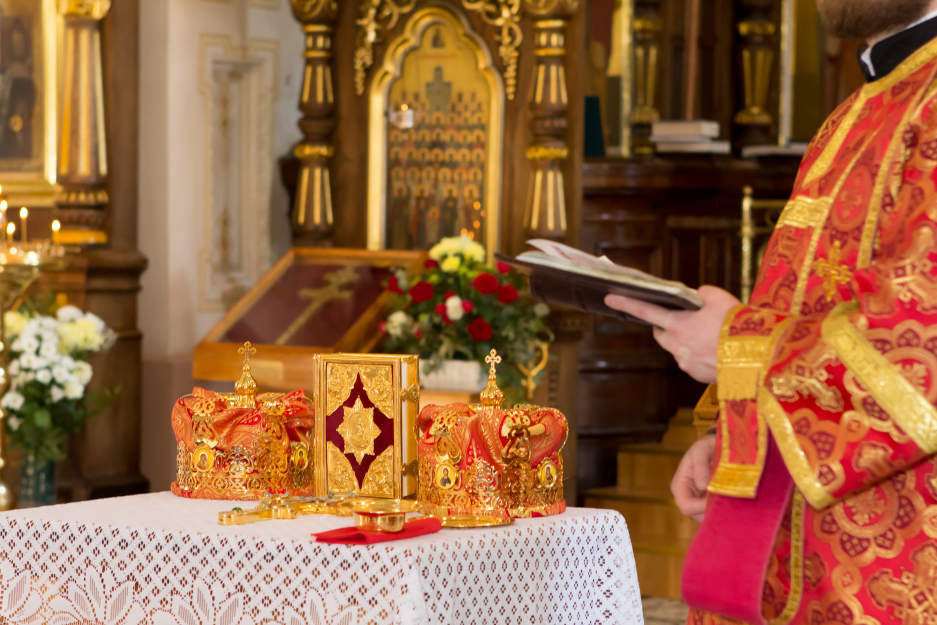
Image by Iryna Bakurskaya from Pixabay