Government Orders Removal of Cross Monument from Jesuit School Façade
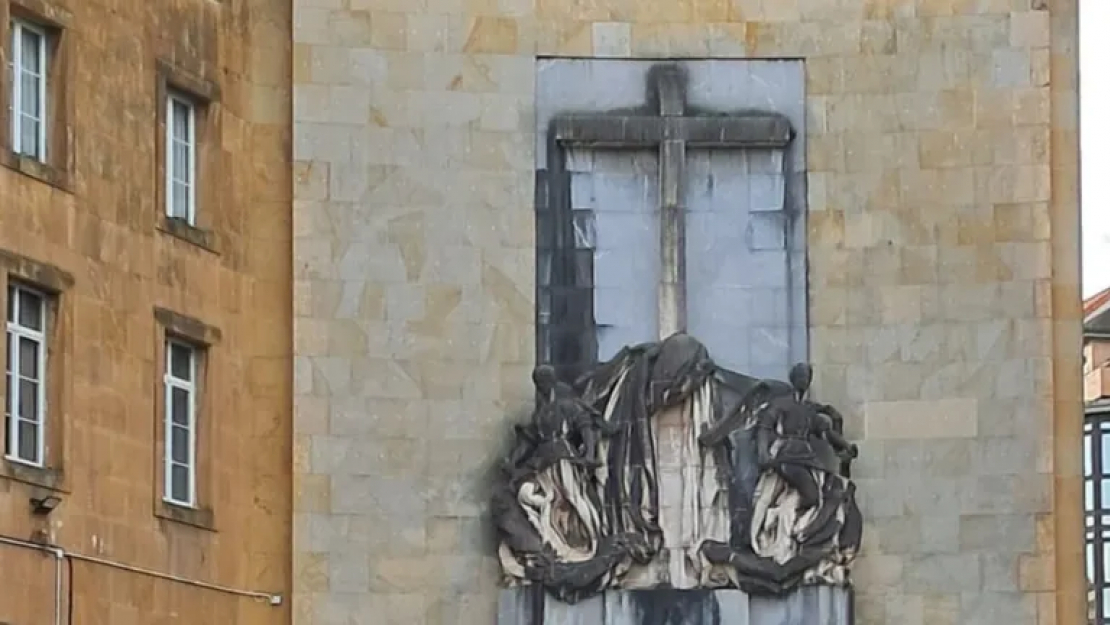
The Government of Asturias has ordered the removal of a cross monument from the façade of the Jesuit Colegio La Inmaculada in Gijón after formally including it in the newly established Catalogue of “Symbols and Elements Contrary to Democratic Memory”. The owners have been given four months to remove the cross. If they fail to comply, the regional government has announced that it will carry out the removal itself and recover the associated costs.
The Government of Asturias has ordered the removal of a cross-and-angels monument from the façade of the Jesuit-run Colegio de la Inmaculada in Gijón, after formally including it in the newly established Catalogue of “Symbols and Elements Contrary to Democratic Memory”, and has granted the owners four months to take it down. Should the Compañía de Jesús fail to comply, the regional authorities have stated that they will proceed with the removal themselves and recover the associated costs. The Jesuits have announced their intention to appeal the removal.
The “Héroes del Simancas” monument, installed in 1958, consists of a sculptural ensemble framed by a large cross and flanked by two angels. The monument was built in remembrance of the soldiers who defended the Simancas Barracks in Gijón during the Civil War siege.
The regional government considers the monument to be a symbol of “Francoist exaltation” under Spain’s “Democratic Memory” legislation and has based its decision on both regional and state law. The work was recently incorporated into the national “Catalogue of Symbols and Elements Contrary to Democratic Memory”, concluding that reinterpretation measures would not sufficiently neutralise its meaning and recommending its removal from public space. A cross in Cáceres has been ordered to be removed on the same grounds (OIDAC reported).
According to official reports referenced in the resolution, there are no overriding artistic or architectural grounds that would require it to remain in public space, and proposals to contextualise it with explanatory plaques were regarded as insufficient.
This decision comes despite the fact that the building itself is included in a catalogue of protected cultural heritage, with the Principality arguing that such protection applies to the church structure itself and not necessarily to the sculptural addition installed years later.
The issue has generated political controversy. During a parliamentary committee session, Minister Zapico stated that, in addition to continuing policies of recognition and reparation for victims of Francoism, “the first thing I am going to do as soon as I leave this committee is sign the resolution ordering the removal of the Simancas memorial,” a decision he subsequently formalised. Municipal authorities in Gijón, governed by Foro and the Partido Popular, have previously maintained that the façade enjoys catalogued protection, a position not accepted by the regional government.
The order does not require the destruction of the sculpture but mandates that it be removed from public view and relocated to a strictly private setting where it is not visible from public roads. The Jesuits have announced their intention to appeal, meaning that the dispute may ultimately be resolved in court.
Source: lne.es, elcomercio, avozdeasturias, eldebate
Photo: lavozdeasturias