Spanish Government's Latest Move Against the Valley of the Fallen Halted by Court
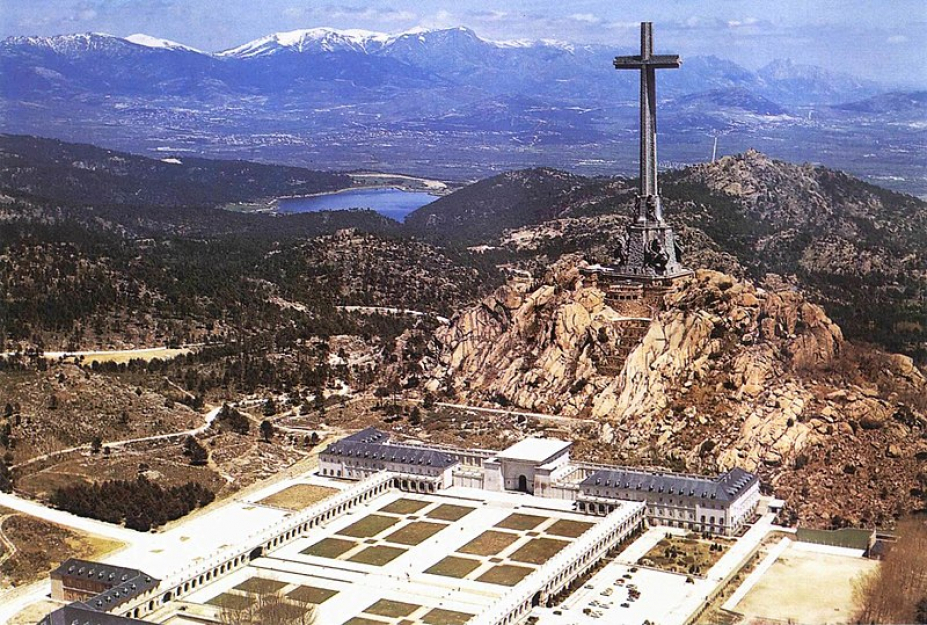
A Madrid court has suspended drilling works linked to the government's controversial plans for the Valley of the Fallen, a Catholic monument built after the Spanish Civil War as a place of worship, remembrance and reconciliation, ruling that the intervention appears to have begun without the required permits.
The Spanish government's campaign to transform the Valley of the Fallen reached a new stage in June 2026 when drilling and geological survey works were launched around the monument as part of its broader "re-signification" project. The works began on 8 June, during the week of Pope Leo XIV's visit to Spain, and were intended to gather technical information for planned changes to the site.
However, on 16 June, the High Court of Justice of Madrid (TSJM) ordered the immediate precautionary suspension of the works after concluding that the legal requirements for carrying them out had not been properly demonstrated. The court noted that the Valley of the Fallen enjoys the highest level of heritage protection as a Bien de Interés Cultural (Asset of Cultural Interest) and highlighted the apparent absence of key administrative approvals. In particular, the judges stated that "it has not been established that a notification of works or an application for a licence, accompanied by the corresponding architect-signed project, has been submitted to the Town Council." The ruling also indicated that there was no evidence that either the relevant regional authorities or the Ministry had formally authorised the intervention. Given the protected status of the monument, the court determined that the works should be halted until their legality, scope and potential impact can be properly assessed.
The decision comes amid a wider dispute over the Valley of the Fallen, a Catholic monument built after the Spanish Civil War as a place of worship, remembrance and reconciliation. The site contains the remains of people from both sides of the conflict and has been cared for by a Benedictine community since 1958.
Critics argue that the drilling works are only the latest step in a broader government effort to reshape the monument's religious identity. In recent years, authorities have promoted plans to remove the Benedictine monks, redefine the meaning of the site through a programme of "democratic memory", and reduce its explicitly Catholic character. Particular concern has focused on the monumental cross — the largest in the world — and on proposals that opponents believe could ultimately diminish the religious significance of one of Spain's most important Christian landmarks.
For supporters of the shrine, the court's intervention is significant not only because it halted the latest works, but because it found that a key stage of the government's project appears to have proceeded without the licences and authorisations normally required for interventions affecting a protected religious and historical monument.
Source: infocatolica.com, libertaddigital, madridactual Previous: OIDAC Europe
Photo: wikimedia
