UK imposes VAT on private education: Christian schools forced to close
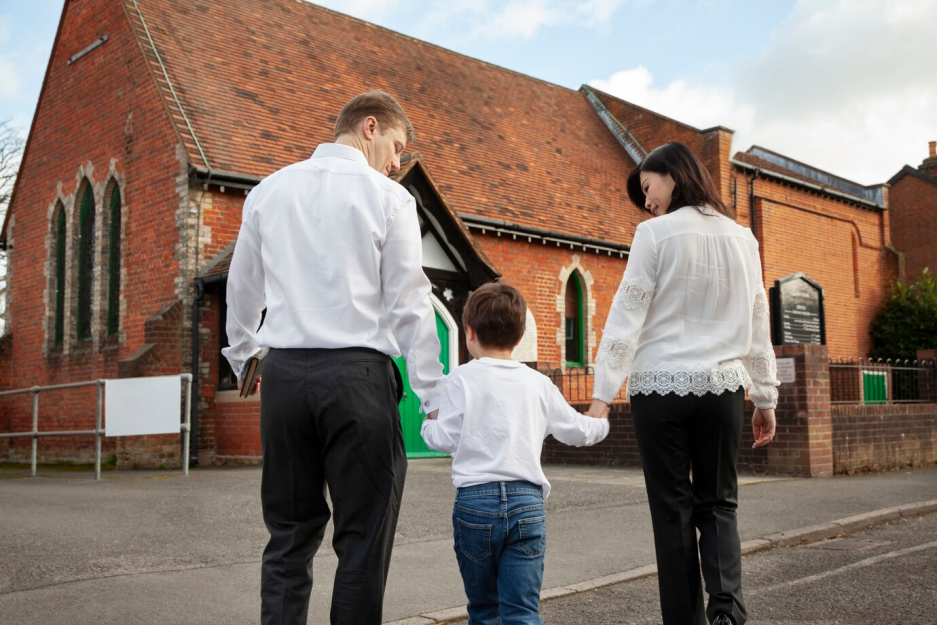
A UK policy change imposing VAT on private school fees came into force in January 2025, forcing schools to pay 20% of tuition fees to the Treasury. Many Christian schools, already operating on tight budgets, face closure or fee increases, reducing parental choice in education. Critics argue that the reform unlawfully discriminates against faith-based education and violates international rights protections.
In July 2024, the UK government published a draft bill to amend the VAT Act 1994. VAT, the consumption tax added to the value of most goods and services bought and sold in the UK, has never been applied to education fees. However, the change in policy has added VAT to private education and is now seriously affecting some private and independent schools. From 1 January 2025, these schools will be required to pay 20% of tuition fees to the Treasury. The UK government argues that ending 'tax breaks' in education will allow an increase in funding for state schools.
Some private schools have already announced their imminent closure as a result of the VAT reform. The rest, knowing they can't cope with the new financial burden, have raised their fees, passing on the cost of the tax to parents.
The measure is causing severe damage to Christian schools, parents and pupils. Many of these schools continue to operate on a shoestring, with parents volunteering to teach, teachers working for the minimum wage and church congregations helping to fund the school's mission. Through all these efforts, Christian schools are able to charge parents low fees, allowing them to choose a Christian education for their children. Steve Beegoo, director of the Christian Schools Trust, makes it clear that “the only way to get Christian education with Christian teachers is through private education. Parents pay for everything themselves and also contribute to public education through taxes."
In the wake of the new VAT law, a number of Christian schools, parents and pupils have launched an application for a judicial review of the law. As the reform penalises Christian families on low and middle incomes, many believe that the government is denying parents the right to educate their children according to Christian values. They accuse the Labour government of unlawfully discriminating against them through this policy, which in effect means that many parents will be forced to submit to the state curriculum.
In fact, Article 18/4 of the ICCPR clearly states that states must respect “the liberty of parents and, when applicable, legal guardians to ensure the religious and moral education of their children in conformity with their own convictions”. Commenting on this right, the UN’s Office of the High Comissioner for Human Rights added that “the practice and teaching of religion or belief includes acts integral to the conduct by religious groups of their basic affairs, such as (…) the freedom to establish seminaries or religious schools”.
Sadly, some families in the UK have no choice but to withdraw their children from the Christian education they have chosen for them. Andrea Williams, Chief Executive of the Christian Legal Centre, commented on the unexpected 'tax raid': “The government’s policy will have the effect of removing parental choice and authority from how their children are educated”.
UPDATE:
On 5 June 2026, the UK Supreme Court granted permission to appeal in the legal challenge against the Government’s decision to impose VAT on independent school fees. The appeal will proceed on the issue of proportionality, with the Court recognising that there is an arguable case as to whether the measure imposes an excessive burden on affected schools, parents and pupils in pursuit of the Government’s policy objectives.
The case, brought by a group of Christian schools, parents and pupils, argues that the VAT policy disproportionately impacts families seeking a Christian education for their children, particularly those on low and middle incomes. The appellants further contend that the measure was introduced without adequate consideration of its consequences for faith-based schools and the families who rely on them.
“This case has always been about ordinary families like mine. We live simply and make sacrifices so that our children can be educated in line with our Christian beliefs. This policy forces us into an impossible choice, and I’m thankful the Supreme Court will now consider whether that is really fair”- stated Stephen White, a father from Bradford.
Source: christianconcern.com, cne.news, telegraph.co.uk, bbc.com, Christian Concern (Update 1) Christian Today (Update 2)
Image: freepik.com