OIDAC Europe Urges Action on Freedom of Religion or Belief and Anti-Christian Hate Crimes at OSCE Conference
Posted on: October 8, 2026
Country:
At the 2026 Warsaw Human Dimension Conference on 7–8 October, OIDAC Europe called on OSCE participating States to protect freedom of religion or belief, address restrictions on peaceful Christian expression and strengthen their response to anti-Christian hate crimes.
OIDAC Europe contributed to two plenary sessions at the 2026 Warsaw Human Dimension Conference. Its contribution to the third session, “Fundamental Freedoms I”, addressed restrictions on public expressions of faith, including silent prayer near abortion facilities, interference in religious communities’ internal affairs and discrimination against Christians in the workplace. It urged participating States to protect peaceful religious expression, parental rights and freedom of conscience.
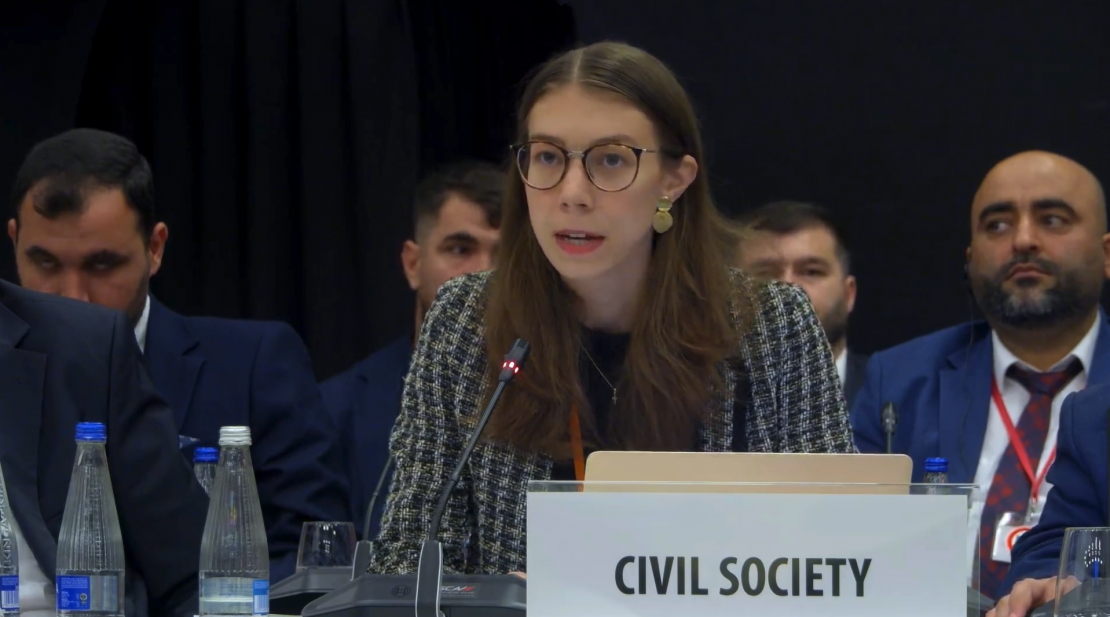
During the fourth session, “Tolerance and Non-discrimination”, Executive Director Anja Tang welcomed ODIHR’s new practical guide on anti-Christian hate crimes and called for its recommendations to be implemented. She highlighted the need for better data, support for victims and an end to political rhetoric that reinforces prejudice against Christians. She also drew attention to the absence of a European Commission coordinator addressing anti-Christian hatred. Watch her intervention and read the full statement below.
Statement by Anja Tang, Executive Director of OIDAC Europe:
Thank you, Mr. Moderator, Madam Chair. My name is Anja Tang, I'm representing the Observatory on Intolerance and Discrimination Against Christians in Europe, a human rights based civil society organization which monitors and documents anti-Christian hatred and discrimination in Europe.
First of all, I would like to express our appreciation and gratitude to ODIHR and its staff for their work to counter intolerance and discrimination based on religion and belief. OIDAC Europe especially welcomes the publication of the Guide “Understanding Anti-Christian Hate Crimes and Addressing the Security Needs of Christian Communities”, which, complementing the existing guides on anti-Semitic and anti-Muslim hate crimes, was an important step in ensuring that religion-based hate crime is addressed in a comprehensive and holistic manner.
At a regional workshop on this new guide in Rome last May, participants once again agreed on the importance of governments collecting disaggregated data on hate crime against all religious communities, including Christians.
Due to a persisting narrative that members of majority religions cannot be victims of hate crime or violence, the reality of anti-Christian hate crime is still often overlooked. At an institutional level, this is particularly visible at the European Commission. While antisemitism and anti-Muslim hate crime are thankfully addressed at the Commission through the respective coordinators, such a position for fighting against intolerance and violent aggression against Christians is, however, still lacking.
Recent data shows that this protection is not optional, but essential. In 2024, more than 2,200 anti-Christian hate crimes were identified in Europe, including more than 270 personal attacks and 3 cases of murder. The current trend seems especially concerning: according to new government data from France, physical violence targeting members of the Christian community doubled. At the same time, recent polling among clergy in Poland showed that half of the interviewed priests had experienced aggression.
In light of these developments, we call upon Participating States to implement the recommendations of ODIHR’s Guide “Understanding Anti-Christian Hate Crime”:
-
Acknowledge the problem of anti-Christian hate crimes.
-
Promote education, awareness-raising and interfaith and interreligious dialogue.
-
Collect data on anti-Christian hate crimes, including in coordination with Christian communities and civil society.
-
Provide support to the victims of anti-Christian hate crime.
-
And refrain from political discourse and narratives which perpetuate anti-Christian bias and stereotypes.
I thank you.